A Cooler Refuge When the City Overheats
In a dense district, masonry, asphalt, and glass soak up sun all day and radiate stored heat deep into the night, leaving inner yards stifling. A green courtyard reverses that pattern. Foliage shades hard surfaces before they can bake, while plants release moisture that cools the surrounding air through natural evapotranspiration. A single mature tree paired with layered shrubs and ground cover can lower the felt temperature of an enclosed yard by several degrees on a summer afternoon, turning the hottest corner of the building into its most breathable retreat. For families without air conditioning, that shaded, living pocket becomes a genuine daily refuge from the urban heat pressing in on every wall.
Rainfall That Sinks In Rather Than Overflows
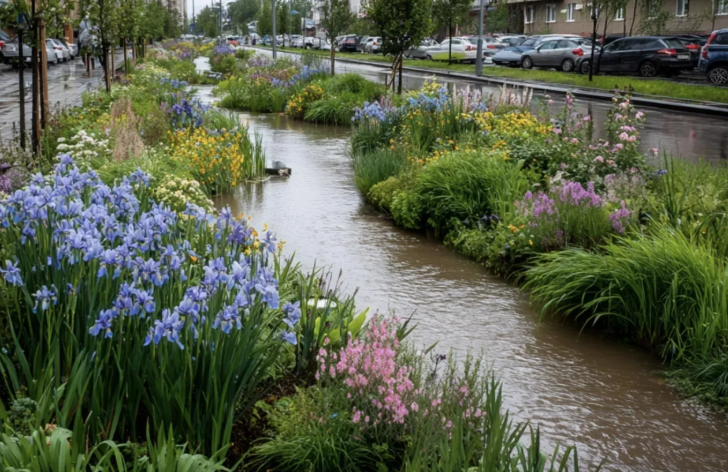
Sealed courtyards send every storm straight to already strained city drains, and heavy downpours are only becoming more frequent. Replacing impermeable slabs with planted beds, gravel zones, and permeable surfaces lets rain soak gently into the ground where it falls. The soil and root systems store that water, feeding the garden through dry spells and releasing the rest slowly instead of in a sudden surge. This eases pressure on ageing sewers, reduces the risk of flooded thresholds and cellars, and keeps precious rainfall on site doing useful work. A well-designed courtyard effectively becomes a small sponge at the centre of the block, quietly managing water that would otherwise be a burden to the whole neighbourhood.
A Living Stepping Stone for Urban Wildlife
Even hemmed in by walls, a green courtyard becomes a vital link in the city's ecological network. Nectar-rich planting draws bees, hoverflies, and butterflies, while dense shrubs and climbers offer nesting cover and food for songbirds moving between gardens and parks. Chosen thoughtfully, native and pollinator-friendly species turn an isolated yard into part of a scattered chain of habitat that helps wildlife survive in an otherwise hostile grid of stone. Residents begin to notice birdsong at dawn, the flicker of butterflies against the greenery, and the seasonal rhythm of blooms. That returning life is not a decorative bonus but a measure of a district slowly becoming healthier and more resilient for every species that shares it.
A Shared Room That Rebuilds Neighbourly Life
In dense housing, neighbours can live for years without ever pausing to speak. A green courtyard gives them a reason to. A shaded bench, a table under the leaves, or a patch where children can safely play draws people out of their apartments and into gentle, unforced contact. The garden becomes a shared living room for the whole building, a place for morning coffee, quiet reading, or an impromptu evening conversation. This everyday togetherness strengthens the social fabric of the block, easing isolation and building the kind of familiarity that makes a community feel safe and cared for. Tending the courtyard together, even in small ways, gives residents a shared project and a common source of pride.
Cleaner Air and a Softer, Quieter Atmosphere
Foliage is a patient filter for the dense city. Leaves trap airborne dust and fine particles, absorb pollutants, and release oxygen, gradually improving the air in the enclosed space residents breathe most often. Just as valuable is the acoustic effect: soil, plants, and greenery-clad walls absorb and scatter the hum of traffic, machinery, and neighbouring life that echoes so harshly off bare masonry. The result is a courtyard that feels perceptibly calmer and cleaner than the street beyond its arch, a buffered inner world where the constant background noise of the district softens into something closer to rustling leaves. For anyone working, resting, or sleeping beside that space, the relief is immediate and lasting.
Lasting Value and Renewed Neighbourhood Appeal
A verdant, well-kept courtyard is one of the most sought-after features in dense urban housing, and it shows in more than atmosphere. Apartments that look onto greenery rather than bare concrete are consistently more desirable to buyers and tenants, supporting property values and reducing vacancy across the whole building. Beyond the numbers, a thriving courtyard lifts the reputation of the address and the wider street, signalling a block that is cared for and forward-looking. The investment protects itself, since a garden designed for its conditions matures and improves year after year rather than wearing out. For owners and co-ownership councils alike, greening the courtyard is both an environmental choice and a sound long-term one.